by Greg Reynolds
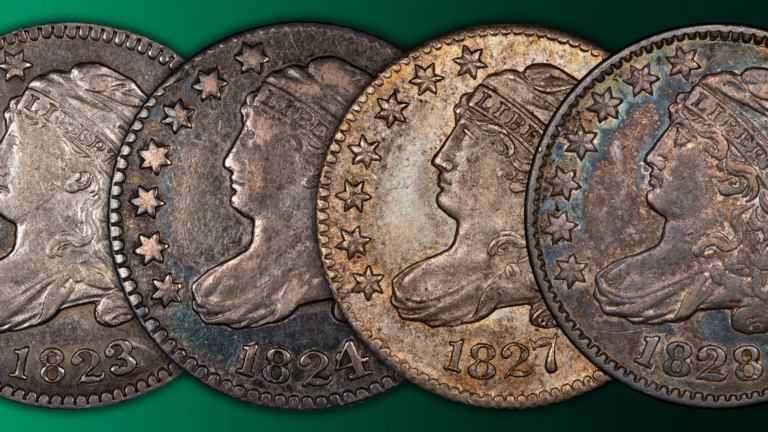
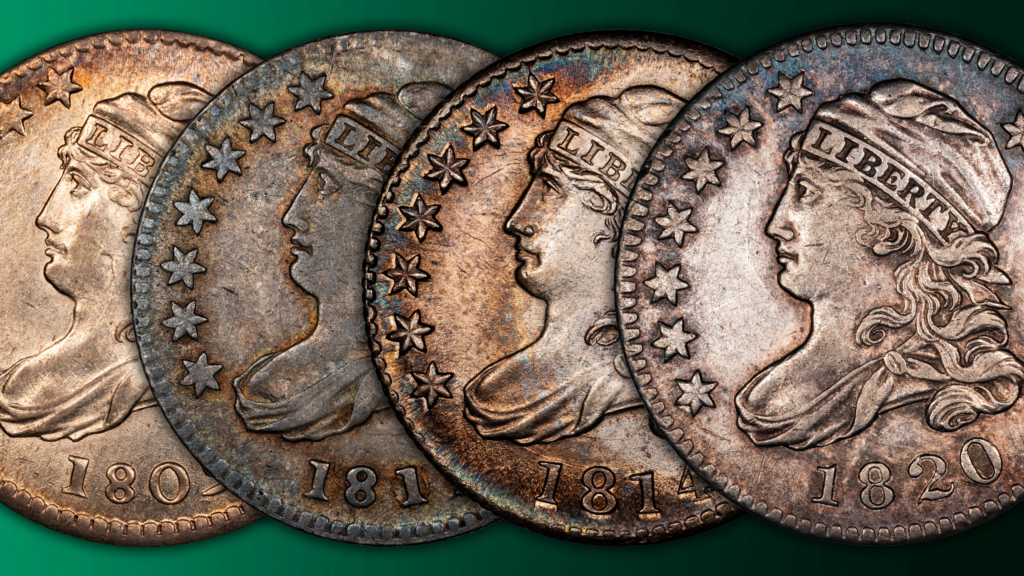
The third type of U.S. dimes was designed by John Reich and minted from 1809 to 1828. Dimes were not minted in 1808 or in 1810. There was not that much demand for them.
Circa 1810, more than two-thirds of the silver coins in circulation in the United States were from the Spanish Empire. The U.S. dollar itself was based upon the Spanish Milled Dollar. Most people in the U.S. were still accustomed to Spanish denominations, which were based upon eighths and multiples of eight.
A Spanish One Real coin was one-eighth of a Spanish Milled Dollar, essentially 12.5 cents in the United States. The U.S. silver dollar did not contain exactly the same amount of silver as a Spanish Milled Dollar (Eight Reales coin), yet they were close in weight and silver content.
At the Philadelphia Mint, few depositors requested dimes before 1820, and it is not clear why anyone demanded them. Historian R. W. Julian emphasizes that half dimes and dimes “were often on Mint account and paid out when requested.” In some cases where “a bank deposited bullion for one or more clients, no one except the bank would know who got the [individual] coins,” Julian adds, in response to my inquiry in April 2026.
For decades, there was little interest in U.S. dimes. Reich Capped Bust dimes are scarce. Coins of the first year of the Capped Bust type, 1809, are keys, as are 1822 dimes. The 1809 will be the last date covered in this discussion, and the 1822 will be analyzed in part 2. It is better to acquire some of the other dates and to become acquainted with the series before spending relatively large sums on the key dates.
The 1811/09
The 1811/09 overdate is fairly scarce. The overdate is hard to discern. If 1811 dimes with regular or ‘normal’ numerals were known, the status of this overdate might be an issue. As 1811/09 dimes were struck from the only known die pairing of dimes from the year 1811, all “1811” dimes are 1811/09 overdate dimes and there is no need for collectors to investigate the validity of the overdate.
The 1811/09 is worth substantially more than the least scarce dates of this design type. The CPG-CAC medium retail estimate for an AG-03 grade 1811/09 is $235. The CAC pop report lists two 1811/09 dimes as grading AG-03, one as grading Good-06 and three as VG-08. The CPG-CAC medium retail value for a VG-08 grade 1811/09 is $470, though somehow I find this estimate to be too low in 2026.
As of April 5, 2026, the CAC pop in all grades is forty-one 1811/09 dimes. Four of the forty-one are in ‘Details’ CACG holders; these four were judged to not merit numerical grades. To fairly reflect upon the rarity of 1811/09 dimes, additional factors must be considered, not just the CAC pop report.
It is a realistic possibility that the 1811/09 is rare in all states of preservation. While the general belief is that 1809 and 1822 dimes are much rarer than 1811/09 dimes, this might not be true. Additional research is certainly needed regarding the rarity and pedigrees of 1811/09 dimes. One reason that it is difficult to estimate the rarity of these is that an unusually large percentage of 1811/09 dimes have serious problems such that they do not or should not qualify for numerical grades.
There are only two CAC approved 1811/09 dimes in the Heritage auction archive, the most recent of which sold on May 12, 2015, a CAC approved VG-08 grade 1811/09 dime for $423. This result is consistent with the current CPG-CAC medium retail estimate of $470. On Sept. 25, 2022, GreatCollections sold a CAC approved VF-30 grade 1811/09 for $2255.
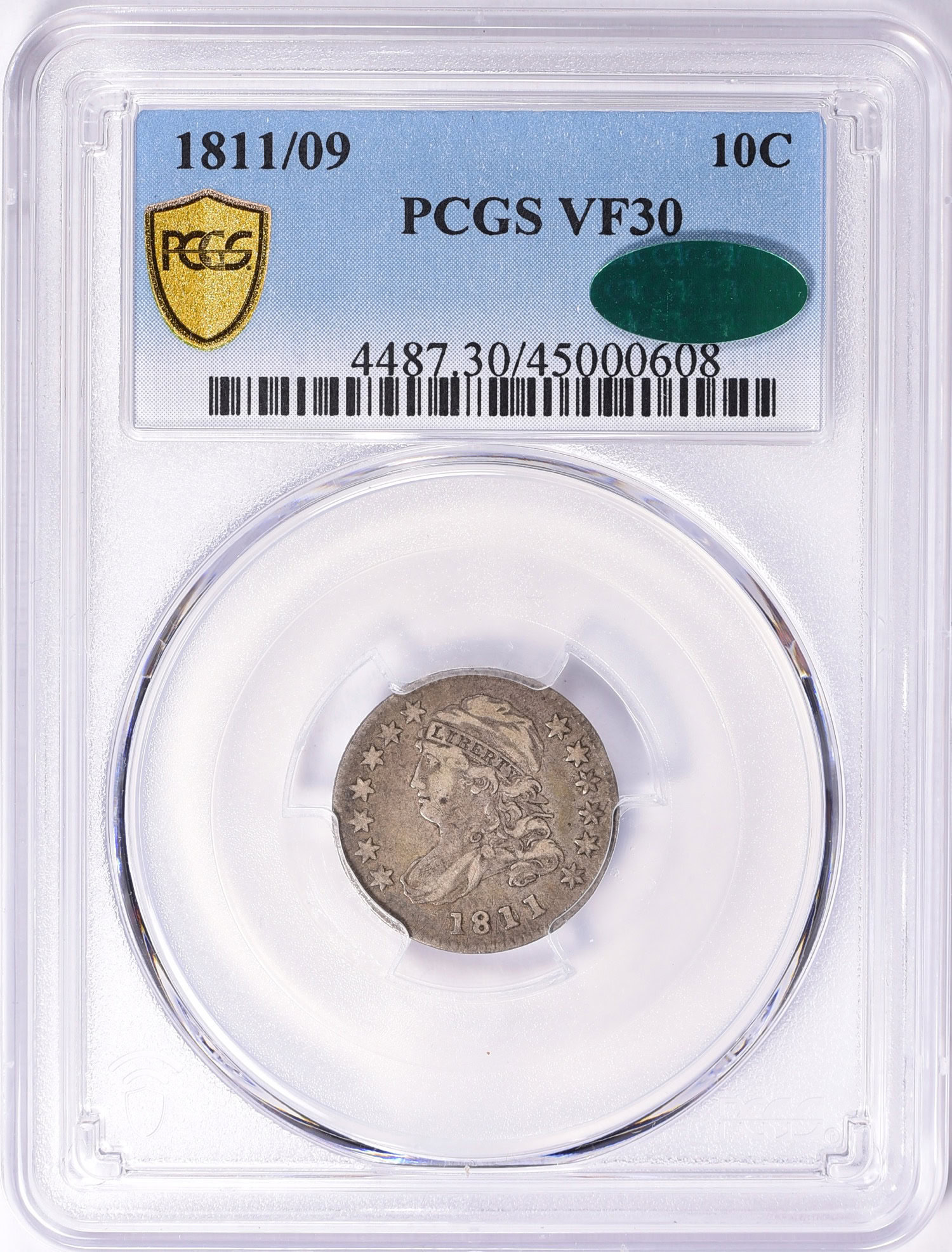
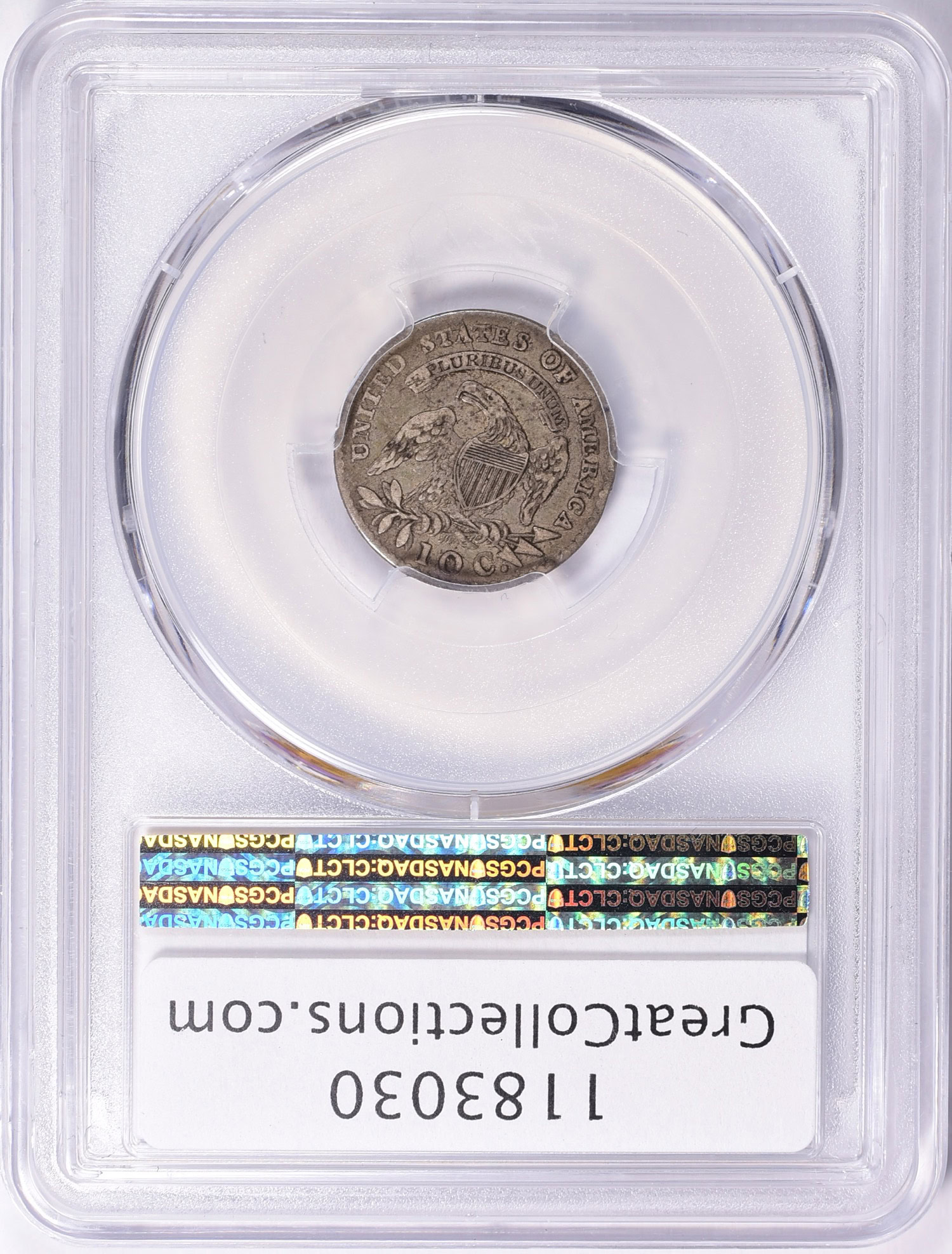
The CAC pop report lists two 1811/09 dimes as grading VF-20, five as VF-25, six as VF-30, one as VF-35, and three as XF-45. Where are they? At the moment, I do not recollect seeing any of these. A realistic possibility is that these tend to be sold rapidly by dealers who specialize in pre-1840 silver coins.
The 1814
There were no dimes minted in 1812 and 1813. Most Americans were not then ready to accept a decimal system of coinage, or had not even thought about doing so.
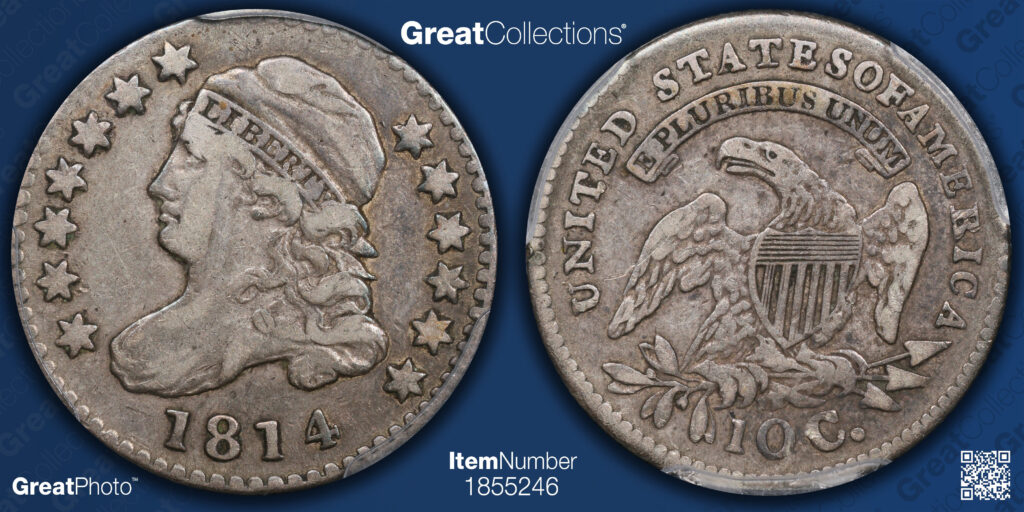
Reference guides often list three major varieties of 1814 dimes, ‘Large Date’, ‘Small Date’ and ‘STATESOFAMERICA.’ On the ‘Large Date’ variety, the numerals are notably larger, especially the numeral ‘8’ and the second numeral ‘1.’ Unless ‘Large Date’ and ‘Small Date’ 1814 dimes are placed side-by-side, however, the sizes of the numerals tend not to attract much attention. The differences between the large numerals and the small numerals are not blatant on 1814 dimes.
One reverse (tail) die is characterized by a careless error. A craftsman at the Philadelphia Mint mistakenly punched letters in the legend such that there is insufficient space between the words ‘STATES’ and ‘OF’ and not enough space between ‘OF’ and ‘AMERICA.’ Rather than ‘STATES OF AMERICA,’ the letters are bunched together, ‘STATESOFAMERICA’! I call this a bunched letters variety.
In the context of Capped Bust dimes, I use the terms ‘STATESOFAMERICA’ and ‘bunched letters’ interchangeably. There are also bunched letters varieties in other series of U.S. coins.
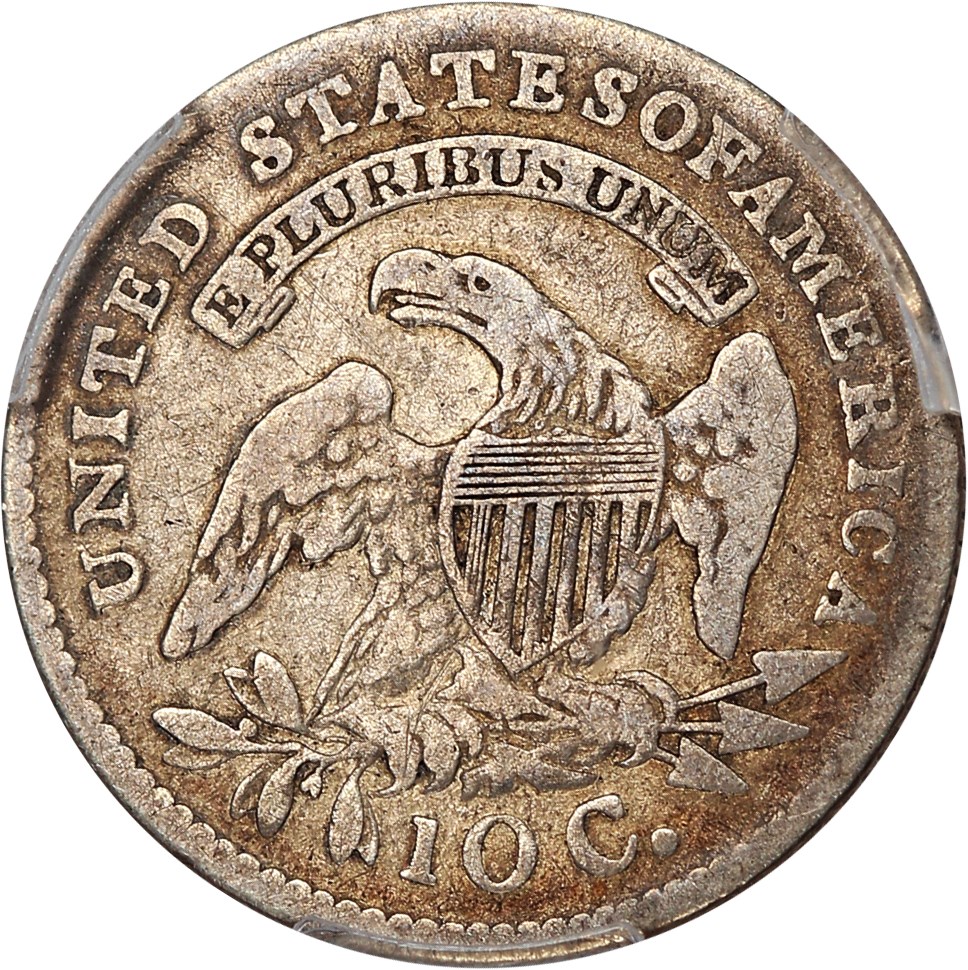
While this ‘bunched letters’ error is curious and a little bit annoying, it is not a huge issue. In my opinion, this is an anomaly that is or should be of interest to collectors of all known die pairings, not to collectors who are seeking one Capped Bust dime of each date. In regard to pre-1828 U.S. coins in general, there are many varieties relating to the shapes and placement of numerals and letters.
It is not practical for most collectors of a series to seek representatives of all known die varieties. Moreover, it is easier to collect ‘by date’ and not spend much time contemplating ambiguous varieties. The importance of a particular variety is not constant among all interested collectors. Indeed, the demand for a rare variety depends upon the personality and budget of each pertinent collector.
In circulated grades, an 1814 bunched letters dime is valued at four to five times as much as an approximately equivalent 1814 ‘Large Date’ dime. If I was assembling a set of Capped Bust dimes ‘by date,’ I would just ignore the 1814 bunched letters variety.
As for whether both an 1814 ‘Large Date’ and an 1814 ‘Small Date’ are needed for a set by date, the matter could be fairly argued either way. I suggest that collectors view these in actuality, not just via pictures, and think about the sizes of the numerals.
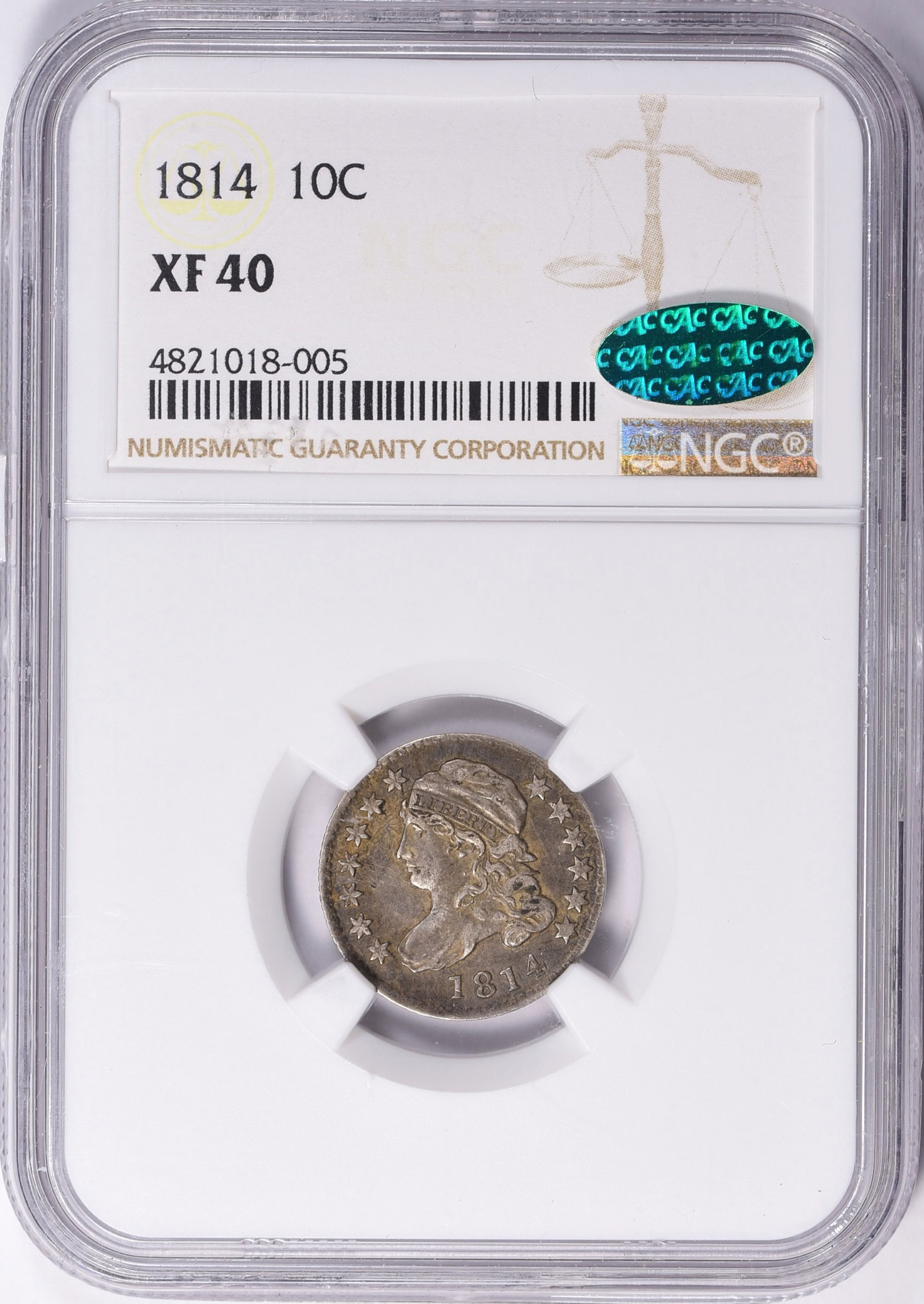
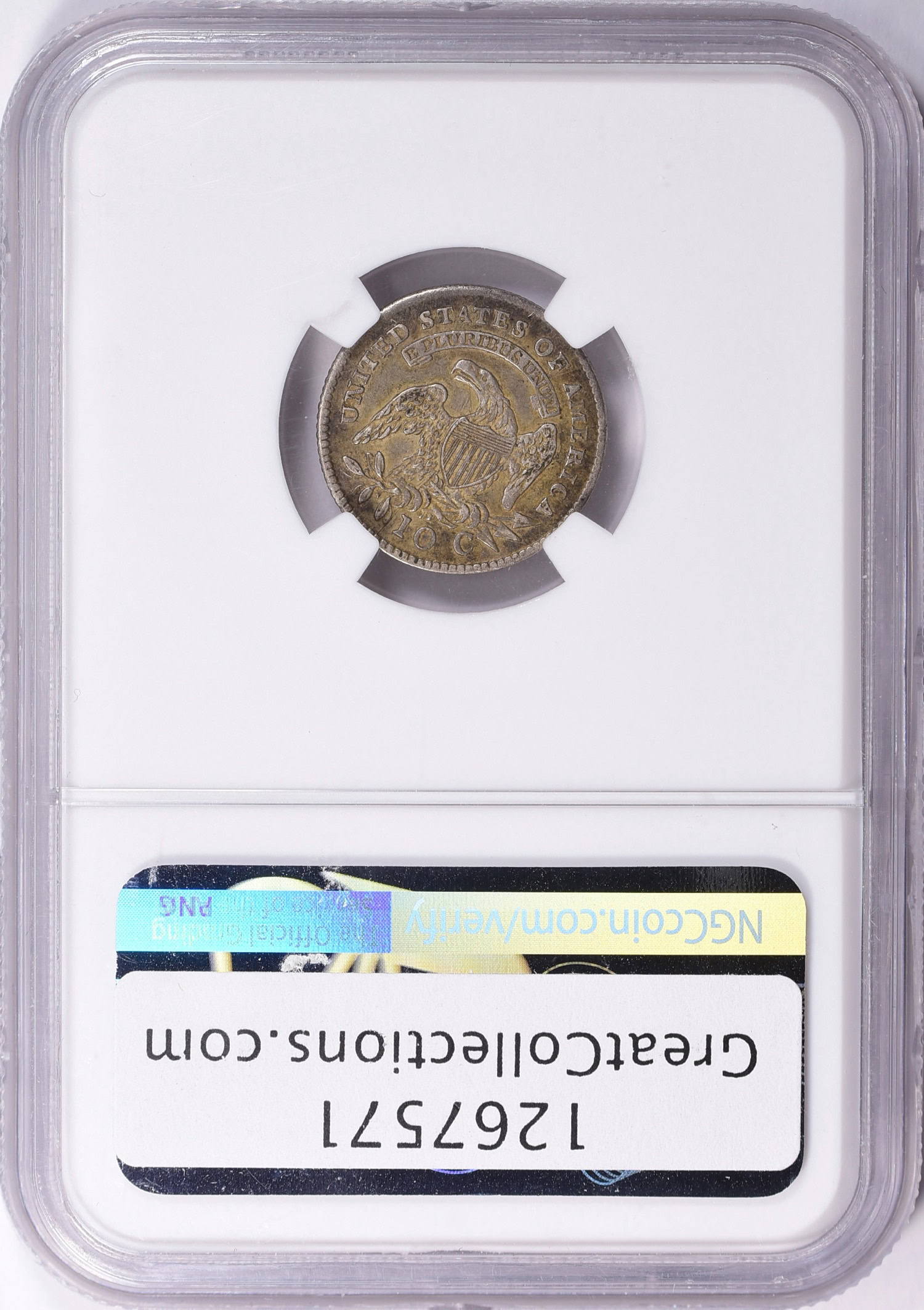
The 1814 ‘Small Date’ is much rarer than the 1814 ‘Large Date’ dime. The CPG-CAC retail estimate for an AG-03 grade 1814 ‘Large Date’ is just $75.
There have been numerous CAC approved 1814 ‘Large Date’ dimes in public sales. On July 9, 2023, GreatCollections sold a VF-30 grade coin for $431.20. On Dec. 4, 2022, GreatCollections sold an XF-40 grade 1814 for $689.70. On April 14, 2025, Heritage sold an XF-45 grade 1814 for $960. On Dec. 5, 2023, Stack’s Bowers sold an AU-58 grade 1814 for $1,440.
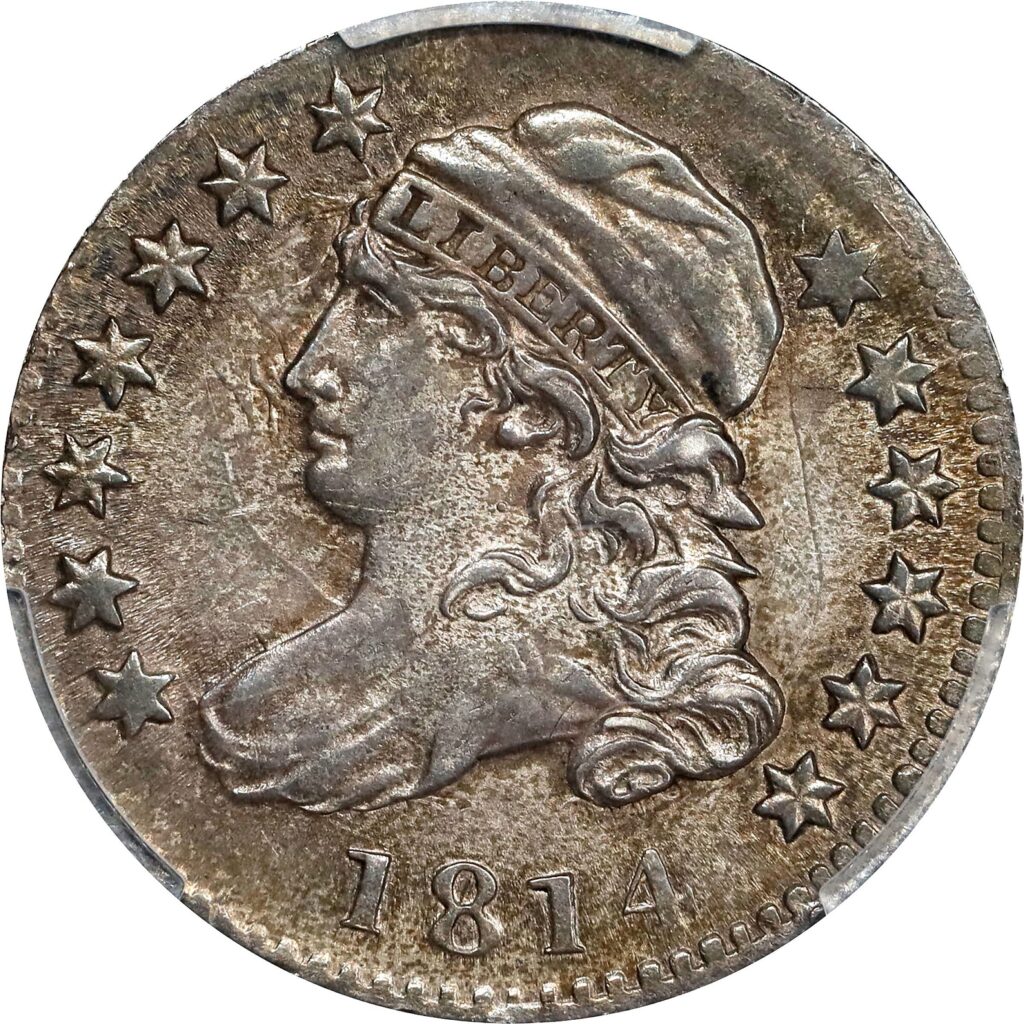
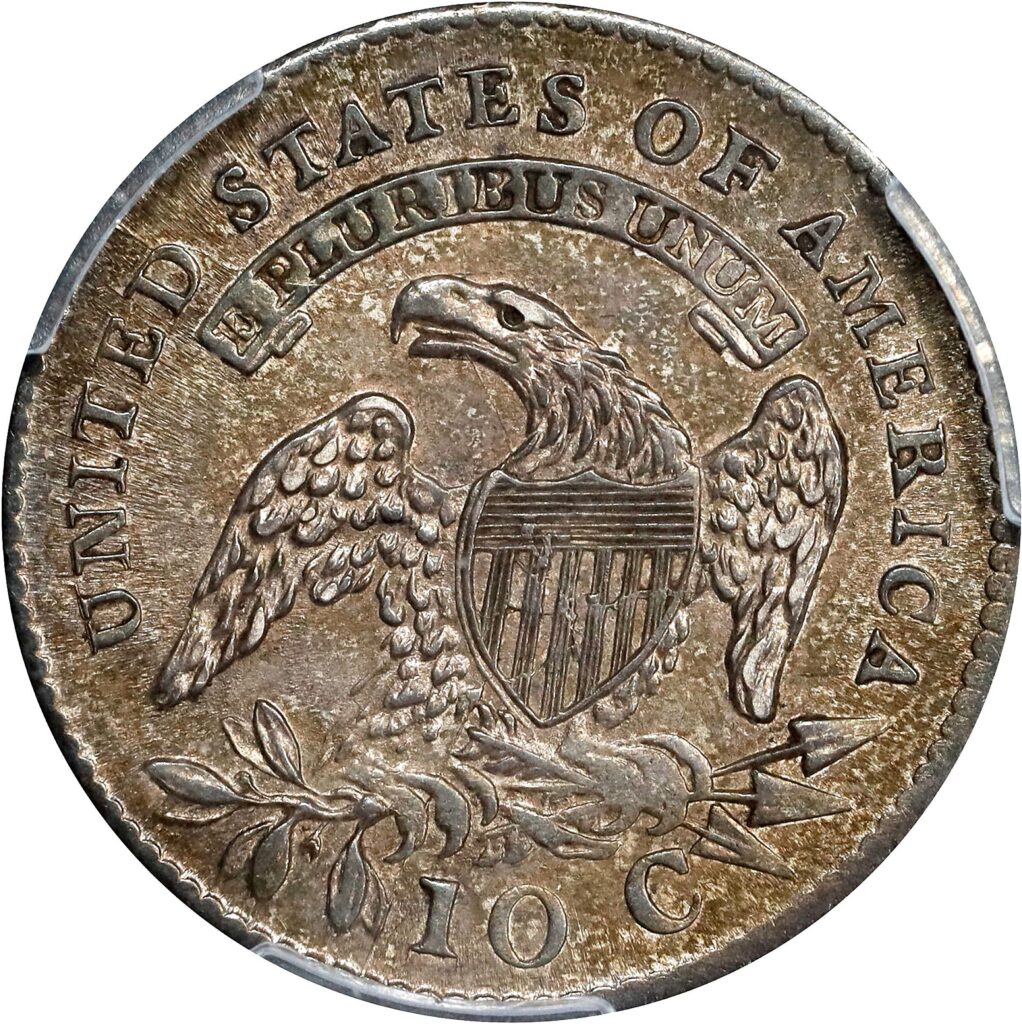
The total CAC population of 1814 ‘Small Date’ dimes is twenty. It is puzzling that there are not several public records of these. On Feb. 6, 2022, Heritage sold a CAC approved, NGC graded VF-35 1814 ‘Small Date’ dime for $840. A Good to VG grade, CAC approved 1814 ‘Small Date’ dime should cost much less than $840.
The total CAC population of 1814 ‘bunched letters’ dimes is twenty-seven. Several of these have appeared in public sales in recent years.
On July 2, 2023, GreatCollections sold a CAC approved VG-08 grade ‘STATESOFAMERICA’ (bunched letters) dime for $744.70. On April 1, 2025, Stack’s Bowers sold a VF-25 grade dime of this variety for $1380. On April 14, 2025, Heritage sold a different VF-25 grade dime of this variety for this same price, $1380. On June 29, 2025, GreatCollections sold a VF-30 grade 1814 ‘STATESOFAMERICA’ dime for $1573. In my opinion, market prices for 1814 ‘bunched letters’ dimes are very substantial amounts for a variety that is relatively inconsequential.
1820 to 1821
There were no dimes minted from 1815 to 1819. It is tempting to say that dimes made a comeback in 1820, yet this is not true. Dimes had yet to be accepted as a standard denomination of coins in commerce. U.S. citizens were using Spanish coins and really clinging to the Spanish monetary system, which had been dominant for centuries throughout much of the world, particularly in the Americas. Spanish Half-Real (1/16 of a dollar) and One Real (1/8 dollar) silver coins were widely used. Coins of the Spanish Empire and of successor entities in Latin America were legal tender in the United States until 1857 and continued to circulate in the West long after 1857.
The ‘STATESOFAMERICA’ bunched letters reverse die that was used to strike some dimes in 1814 was kept at the Philadelphia Mint and used again in 1820. This bunched letters variety, often referenced as 1820-JR1, is very rare. There are probably fewer than 160 in existence, perhaps only 125? More than a few are uncertified.
The CAC pop for this bunched letters variety (1820-JR1) is just twenty-five. The ‘bottom pop’ is one in Good-06 grade, for which the CPG-CAC medium retail estimate is $255.
On Dec. 4, 2022, GreatCollections sold a CAC approved, NGC graded VF-30 1820 bunched letters dime for $1019.70. On March 8, 2020, GreatCollections sold a CAC approved XF-40 grade dime of this variety for $1375. That coin was formerly in the collection of a legendary dime collector and author, David Davis.
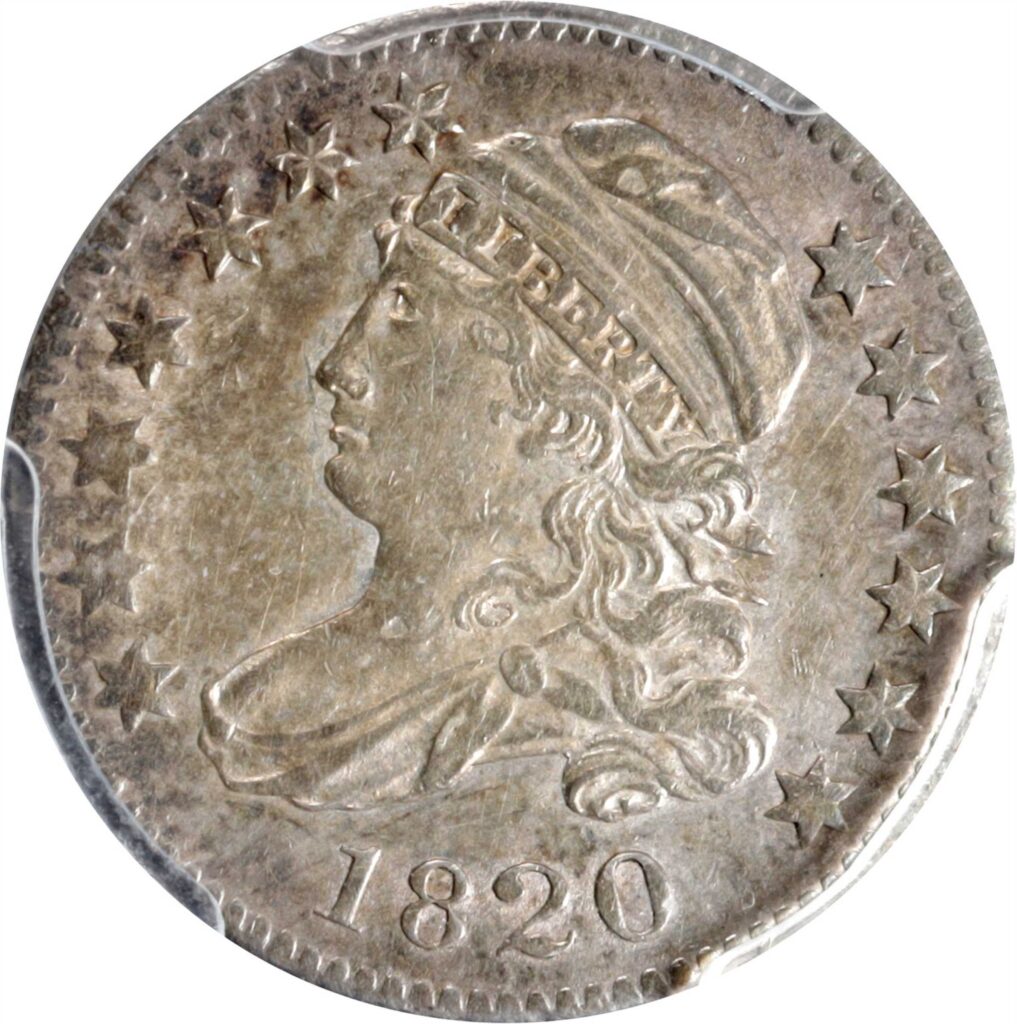
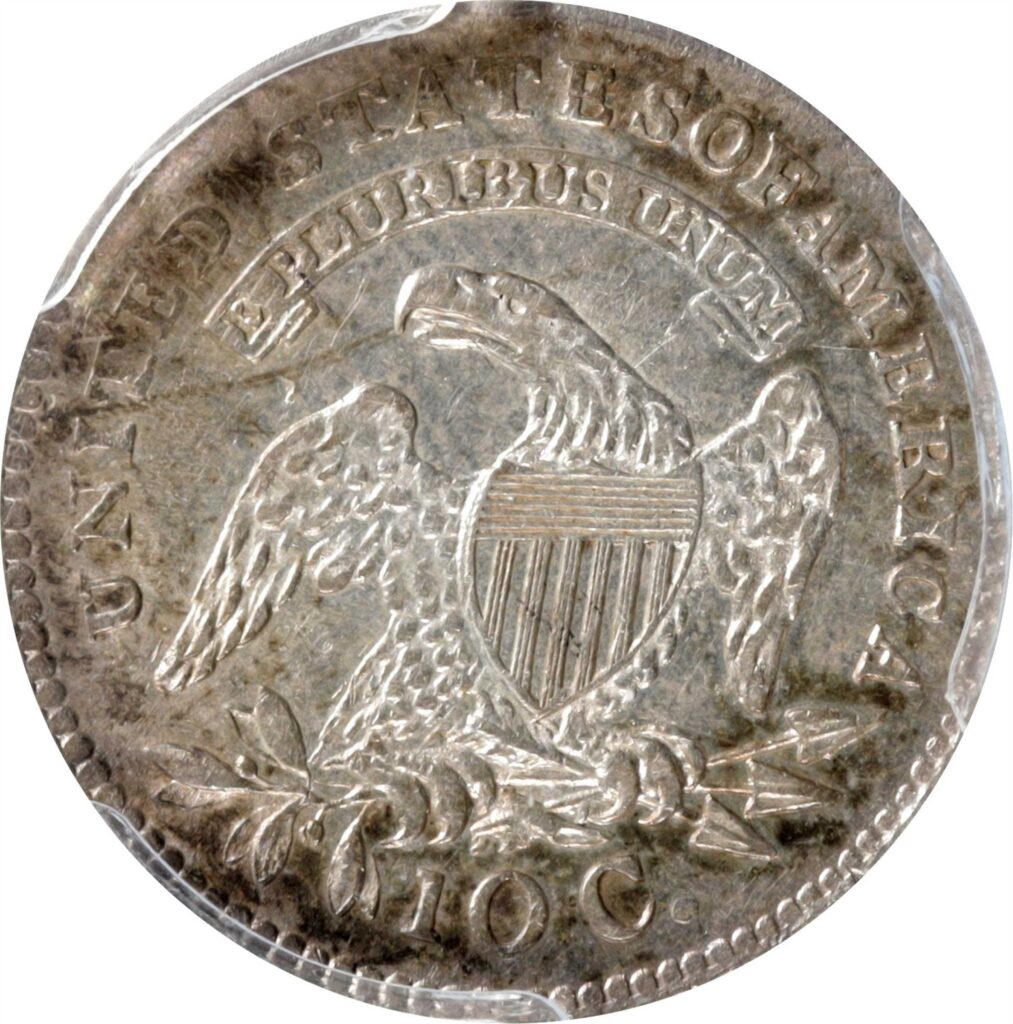
The CAC pop in AU-55 of this 1820 bunched letters (JR-1) variety is one. This coin was auctioned by Stack’s Bowers on April 5, 2022, for $4320. On Aug. 8, 2024, GreatCollections sold this same coin for $3309.90. For many rare coins, ‘bidding went crazy’ during the Stack’s Bowers event on April 5, 2022. Many of the results that day were anomalies, not market prices. Also, by August 2024, market levels for many rarities had fallen from earlier highs and coin markets were calmer in 2024 than they were from 2021 to 2023.
The 1820 ‘Large 0’ and the 1820 ‘Small 0’ are generally collected as if they are two different dates of the same year. The ‘Large 0’ is taller, though it does not seem that much different from the ‘Small 0,’ which is not small. It has been noted that the fonts characterizing the reverse letters are different, too.
In circulated grades, the scarcity and values of these two varieties are very similar. Collectors decide whether to acquire one or both. For some reason, the CAC population of the 1820 ‘Small 0’ in circulated grades is considerably larger than the population of the 1820 ‘Large 0’ dime.
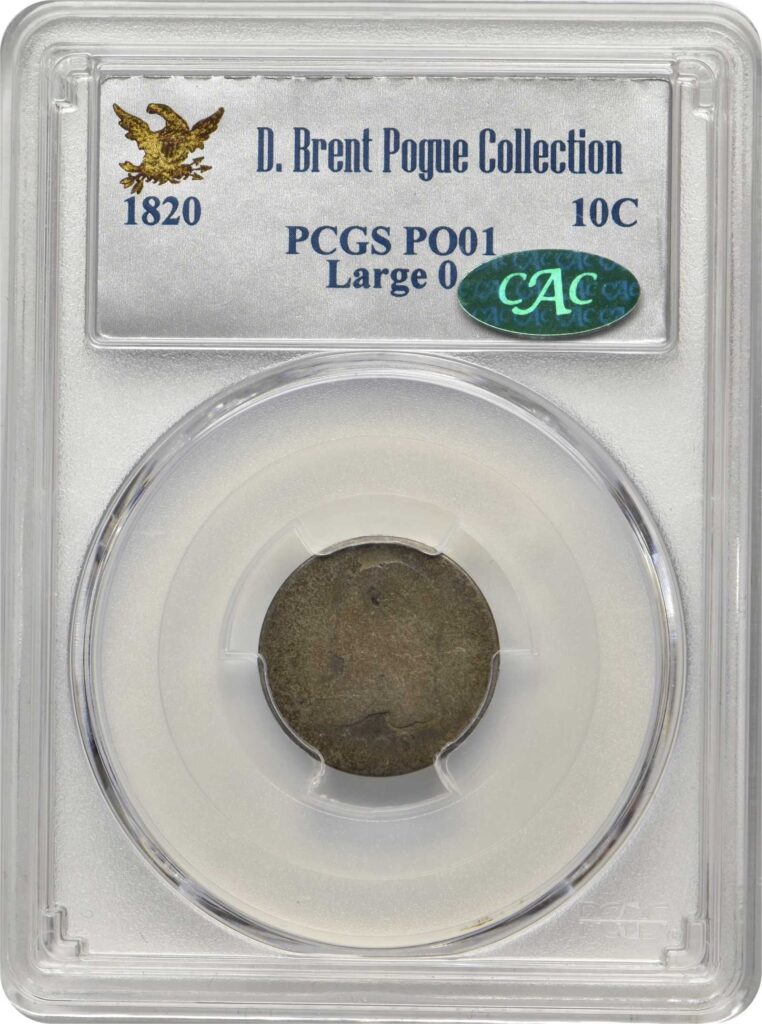
For those who like to pursue the most heavily worn coins, the ‘bottom pop’ 1820 ‘Large 0’ was auctioned by Stack’s Bowers for $156 on March 20, 2020. It was PCGS graded Poor-01 and has a green sticker of approval from CAC.
GreatCollections has recently sold a few CAC approved, PCGS graded 1820 ‘Large 0’ dimes: a VG-08 grade coin for $172.70 on June 15, 2025, a VG-10 grade coin for $212.30 on Dec. 15, 2024, a VF-20 grade 1820 for $671 on Sept. 28, 2025, a VF-25 grade coin for $401.50 on April 12, 2025, and an XF-40 grade 1820 for $1005.28 on June 15, 2025. On April 14, 2025, Heritage sold a CAC approved XF-45 grade 1820 ‘Small 0’ dime for $960.
While considering auction results, it is important to keep in mind that multiple factors may affect bidding, including the eye appeal of the coins, the characteristics of photographs of coins, the relative rarity of the die pairing, the other coins being offered in the same auction session, and the nature of the bidders who happen to be participating in any one event. Auction prices can be in wholesale or retail ranges, and often fall around the wholesale/retail border for the respective coin.
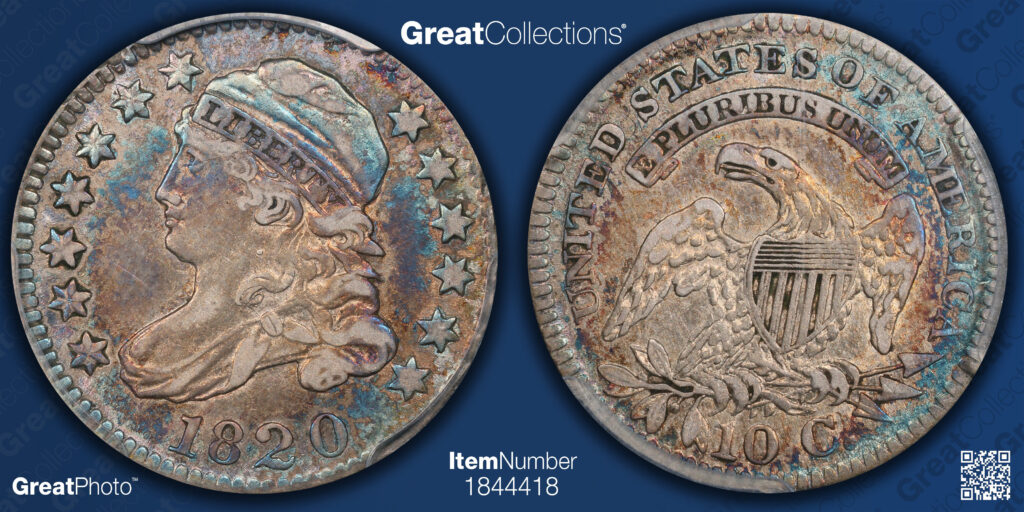
The 1821 ‘Large Date’ and the 1821 ‘Small Date’ are more distinctive than the 1820 ‘Large 0’ and the 1820 ‘Small 0.’ Indeed, the 1821 ‘Small Date’ and the 1821 ‘Large Date’ are unquestionably two distinct dates of the same type and year. One of each is required for a complete set ‘by date.’
The numerals of the 1821 ‘Small Date’ are especially small. Indeed, they are obviously smaller than the numerals on other Reich Capped Bust dimes. In addition, the numeral ‘2’ in the 1821 ‘Small Date’ is flat, also called square-based, while the ‘2’ in the 1821 ‘Large Date’ is of the ‘Curl Base’ variety, sometimes called a ‘Curled 2.’ These are notably different styles of the numeral ‘2’.
In circulated grades, these are about equally scarce. In the CAC population report, however, the 1821 ‘Small Date’ is much scarcer in Fine to Very Fine grades.
Key 1809
The 1809 is the second rarest date in the series, unquestionably a key and one of the most famous dimes among collectors. This was the first issue of a new design type during an era when there was little interest in dimes. Although the 1822 is rarer than the 1809, an unprecedented number of U.S. dimes were minted in 1820 and 1821, more than 900,000 in 1820 and nearly 1.2 million in 1821. In contrast, only 51,065 were minted in 1809, and about 65,000 in 1811. Zero dimes were minted in 1810, 1812, and from 1815 to 1819.
The mintages in 1820 and 1821 were therefore like an avalanche of dimes. In 1809, dimes were still novelty items that few people wanted or respected. Undoubtedly, some people acquired 1809 dimes as curiosities.
To collectors later, there is something especially exciting about the 1809 dime. They were neglected or regarded as inconsequential in their own time, while 1822 dimes followed relatively massive mintages of 1820 and 1821 dimes. The dime denomination had become accepted, for the most part. Most surviving 1809 dimes were probably found in change by collectors or profit-seekers during the 1830s and 1840s. Originally saved 1809 dimes probably sat inside homes for years or decades before the people who saved them or their beneficiaries spent them.
The current CPG-CAC medium retail estimate for a CAC approved Good-04 grade 1809 dime is $1150, though this is just an estimate and should not be taken too seriously. On Dec. 4, 2022, GreatCollections sold a CAC approved VF-25 grade 1809 dime for $3300. On April 10, 2023, Heritage sold this same coin for $3360. In the coin business, a price differential of less than 2% for the same coin is not significant. Generally, appealing 1809 dimes are hard to find, and many of those around have problems.
In July 2014, I estimated in a published article that 275 to 315 1809 dimes survive. I have not changed this estimate in the interim, though I invite researchers who think otherwise to contact me.
Invariably, some people who are not assembling sets acquire 1809 dimes for other reasons. Also, there are collectors who enjoy owning rarities even if they never finish a related collecting project.
A complete set by date of Capped Bust dimes is a noteworthy achievement if it is done in a gradual and careful manner. It would not be an achievement for one collector to buy a complete set from another collector in an instant. The remainder of the Reich Capped Bust dimes, those dating from 1822 to 1828, are covered in the next part. A discussion of the collecting ‘by date’ of circulated Kneass Capped Bust dimes will follow.
Copyright © 2026 Greg Reynolds
About the Author
Greg is a professional numismatist and researcher, having written more than 775 articles published in ten different publications relating to coins, patterns, and medals. He has won awards for analyses, interpretation of rarity, historical research, and critiques. In 2002 and again in 2023, Reynolds was the sole winner of the Numismatic Literary Guild (NLG) award for “Best All-Around Portfolio”.
Greg has carefully examined thousands of truly rare and conditionally rare classic U.S. coins, including a majority of the most famous rarities. He is also an expert in British coins. He is available for private consultations.
Email: Insightful10@gmail.com
Suggested Articles