by Greg Reynolds
A complete type set of twentieth century silver dimes is small, simple, and usually inexpensive. It can easily be turned into a larger type set of all twentieth century silver denominations or of all design types of dimes from an earlier starting point until the present.
Collecting by design type involves acquiring at least one representative of each design type that fits into some kind of a type set. In many cases, a type set is limited to one denomination or metal (copper, nickel, silver or gold). Some other type sets are limited to a time period, such as all of one denomination or all of one metal from a particular century. A type set of U.S. twentieth century silver coins of all denominations is particularly practical.
This discussion is primarily aimed at beginners, though I hope that intermediate and even advanced collectors may learn something, too. As usual, I attempt to provoke thoughts and encourage collectors to determine the collecting objectives that are best for them.
It is unusual for someone to build a set that represents all design types of U.S. coins from 1793 to the present, as this would be a large and rather expensive undertaking. Most collectors are not enthusiastic about the entire spectrum of U.S. coinage or would rather focus on design types that they especially like. I tend to discuss limited type sets that are meaningful in the context of the culture of coin collecting.
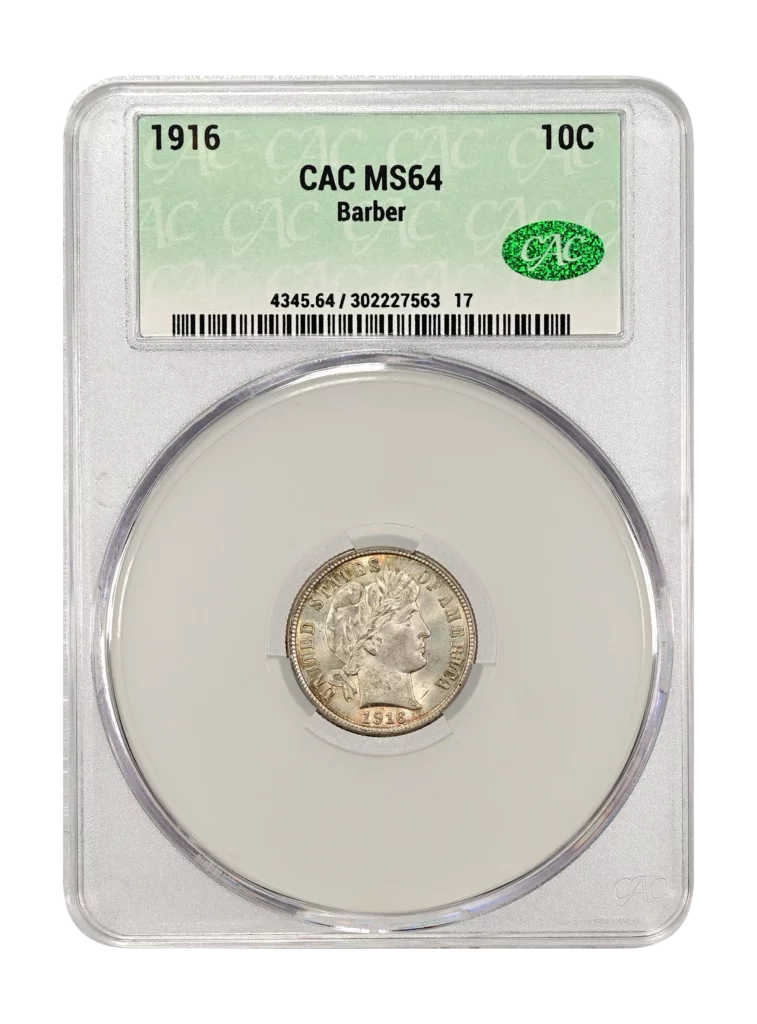
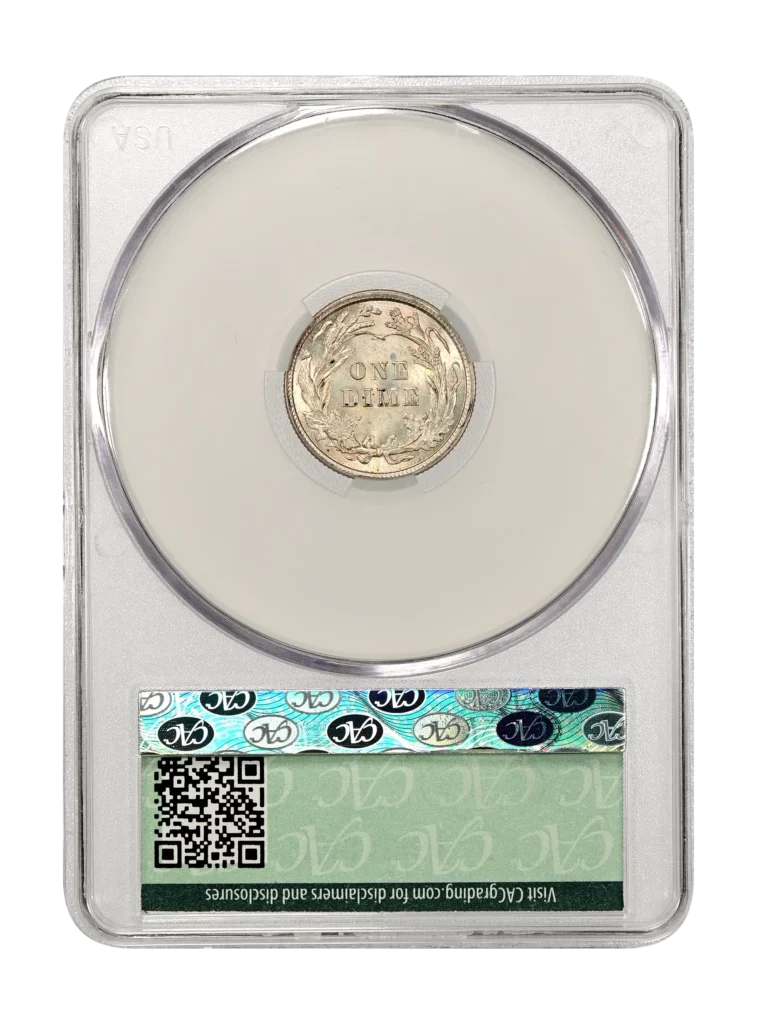
Of course, collectors can and do develop their own type sets that are not necessarily consistent with traditions and may be illogical. A collector who blazes his own path, however, may end up with a type set that is not understandable to other collectors. In the context of traditions in the culture of coin collecting, there are widely understood ways to develop or expand a type set.
Several options for type sets can be found in the CAC registry. For the “20th Century Type Set (1900-1999) Business Strikes, Without Gold” in the CAC registry, a silver Roosevelt dime has a weight of one unit, yet a ‘Full Bands’ (FB) designation doubles this weight to two units. An FB designation therefore has considerable value to someone competing in some categories in the CAC set registry.
Generally, registry sets and other kinds of sets of U.S. coins include business strikes or Proofs, but not both in the same respective set. Business strike silver dimes are being covered in a series of articles. Proof silver dimes minted from 1992 to the present will be mentioned in the context of a type set of Proof silver dimes.
U.S. dimes were first minted in 1796 under a law that required each to contain 37.125 grains (0.07734375 Troy ounce) of silver, plus copper. An alloy of silver and copper is better suited for coinage than silver alone.
After the Coinage Act of 1853 was implemented, each dime was specified to contain 34.56 grains of silver (0.072 Troy ounce), a reduction of about 7% from the silver content defined in the Coinage Act of 1792. From 1837 to 1964, all dimes were specified to be 90% silver and to have a diameter of seven-tenths (70%) of one inch.
Starting in 1965, dimes and quarters were struck in a copper-nickel sandwich alloy, generally referred to as “clad.” An important era in the nation’s coinage and in U.S. history had come to an end. With the exception of half dollars, which continued to contain some silver until 1970, U.S. coins dated after 1964 that were minted for use as money no longer contained silver. U.S. Mint products for collectors, for speculators or as souvenirs constitute a separate category.
The late David Lange, a highly accomplished researcher, found evidence that some 1964-dated silver dimes were intentionally minted in 1965 and later. Lange said that “Philly continued striking 1964 silver half dollars into early 1966, as did the Denver Mint with 1964-D dimes.”
Leftover silver bullion and silver dime planchets (prepared blanks) had been earmarked for production of silver dimes before the law ending production of silver dimes was passed. My impression is that leftovers were gradually and quietly used to produce 1964-dated silver dimes in 1965 and 1966. Presumably, these are indistinguishable from silver dimes that were actually minted during 1964. Silver dimes dated after 1964 were not struck for circulation.
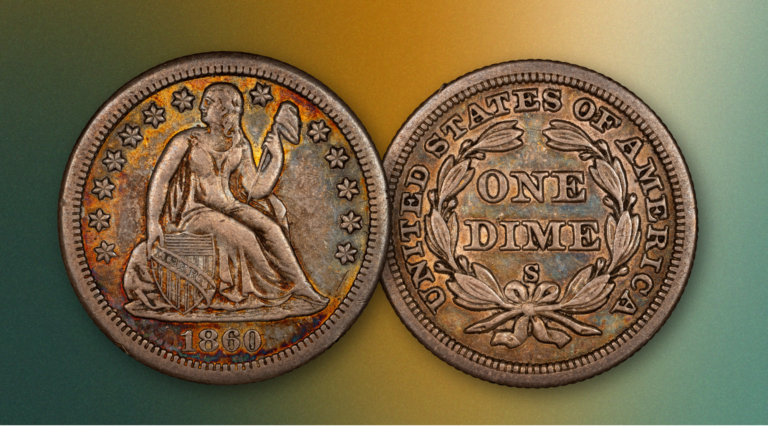
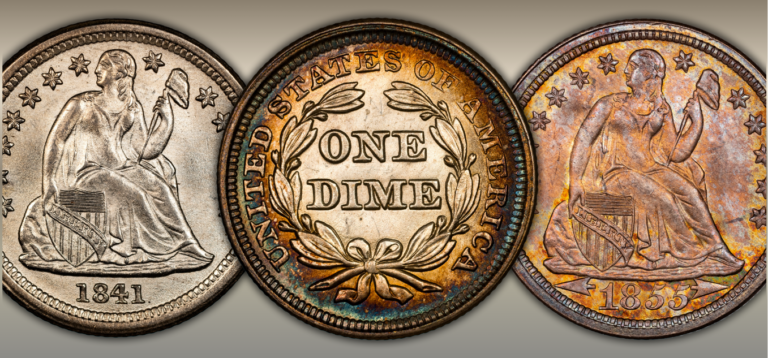
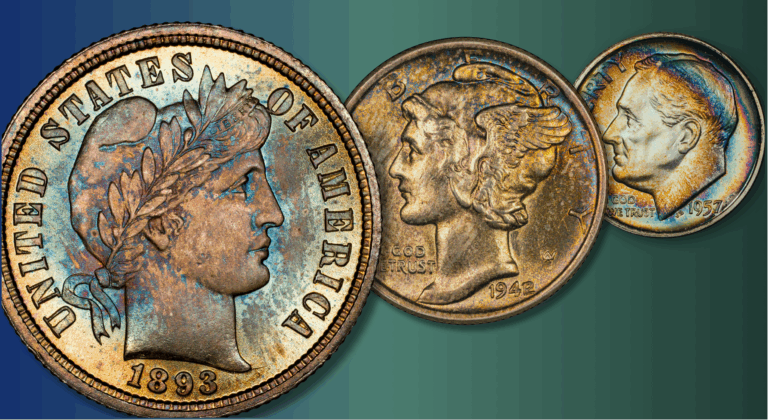
A complete type set of business strike, silver U.S. dimes requires just thirteen coins, six of which are Liberty Seated types. The front (head) of a coin is called the obverse, and the back is the reverse.
1. Draped Bust Obverse, Small Eagle Reverse (1796-97)
2. Draped Bust, Heraldic Eagle (1798-1807) — sometimes called ‘Large Eagle’
3. Capped Bust, “Large” (1809-28) – design credited to John Reich
4. Capped Bust, “Small” (1828-37) – modified design and new minting technology
5. Liberty Seated, No Stars (1837-38)
6. Liberty Seated with Stars and No Drapery (1838-40)
7. Liberty Seated with Stars and Drapery (1840-1853, 1856-60)
8. Liberty Seated – Arrows & Stars on Obverse (1853-55)
9. Liberty Seated – Legend on Obverse (1860-73, 1875-91)
10. Liberty Seated – Arrows & Legend on Obverse (1873-74)
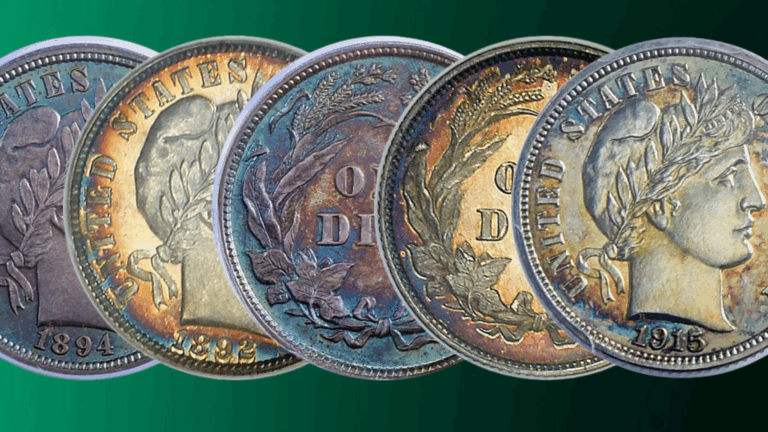
11. Barber (1892-1916)
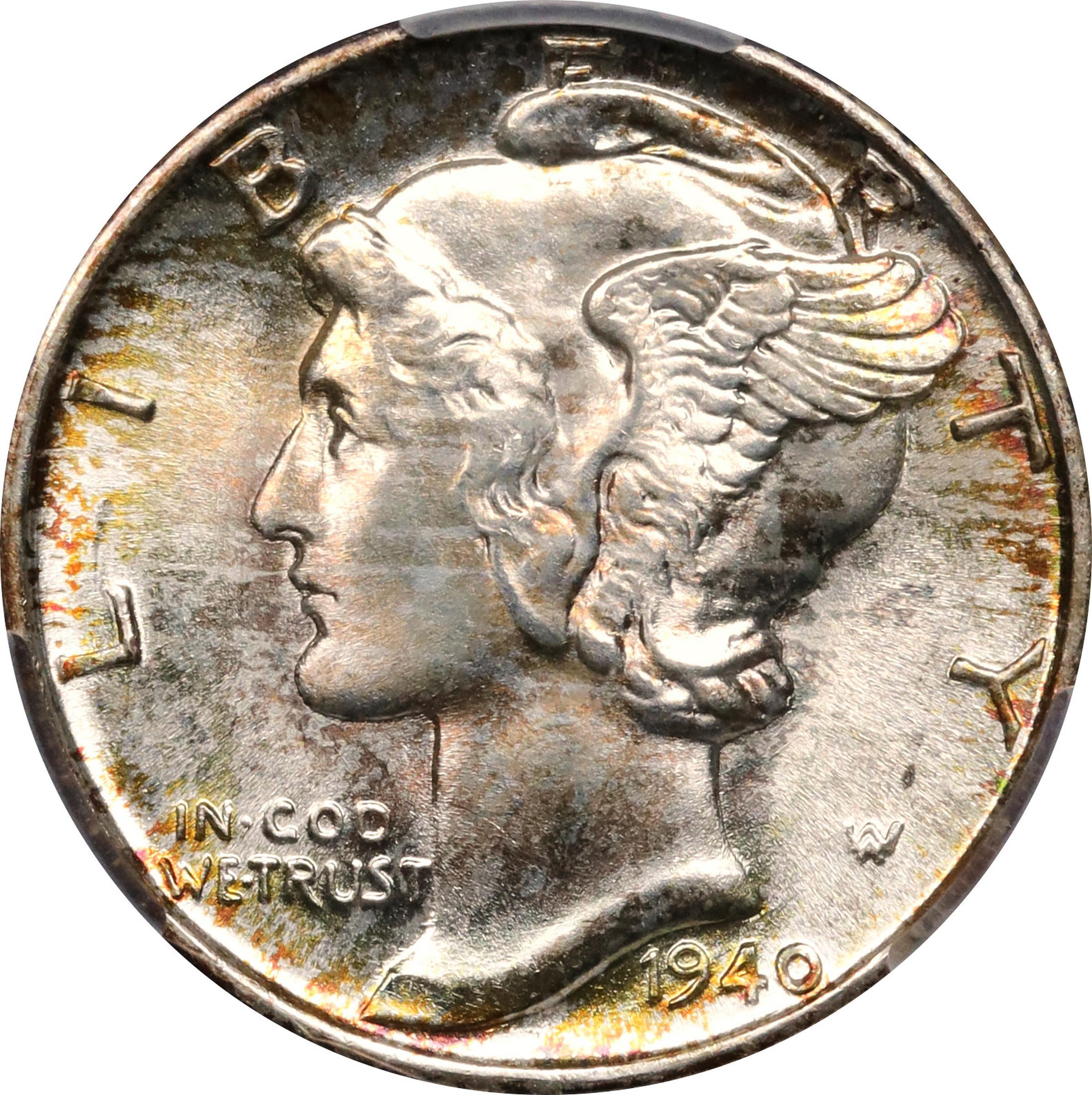
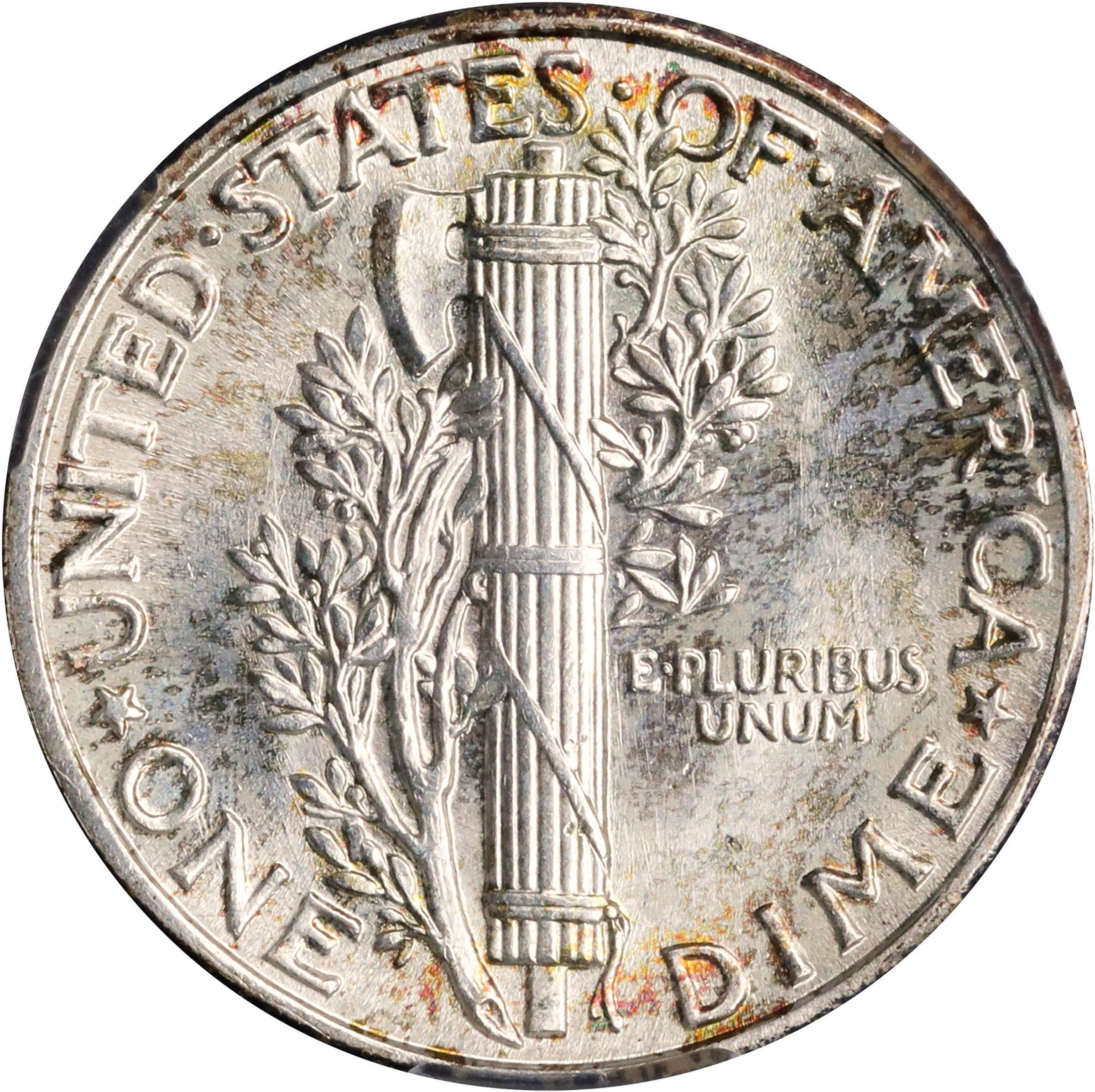
12. Mercury (1916-45)
13. Roosevelt (1946-64)
Type #13 – Silver Roosevelt Dimes
Silver Roosevelt dimes minted for circulation were dated from 1946 to 1964. For a type set, just one is needed. Clad (copper-nickel) business strike and specially struck Roosevelt dimes are different topics. Clad Roosevelt dimes were first struck in 1965 and continue to be minted in the present. These do not contain any silver.
‘Full Bands’ (FB) designations relate to the sharpness of bands on the central reverse (tail side) of the coins. As Roosevelt and Mercury dimes with ‘Full Bands’ designations are worth more points in registry sets and appeal to some collectors for other reasons, a significant number of buyers demand them for type sets or date sets. Collectors should make their own decisions regarding the value and desirability of dimes with ‘Full Bands’ (FB) designations.
In my view, the main purpose of a type set is to obtain one of each pertinent design type so that the artistic or historical aspects of different designs can be appreciated. There is not a need to spend much money to build a type set of twentieth century coins.
CACG graded Roosevelt dimes can be purchased for modest prices online, at coin shows or at coin stores. Around three thousand business strike Roosevelt dimes have been CACG graded and encapsulated at the CAC office in Virginia Beach. On June 8, 2025, GreatCollections sold a CACG graded MS-67 1957 Roosevelt dime for $42. It has blue toning with some russet and underlying mint luster.
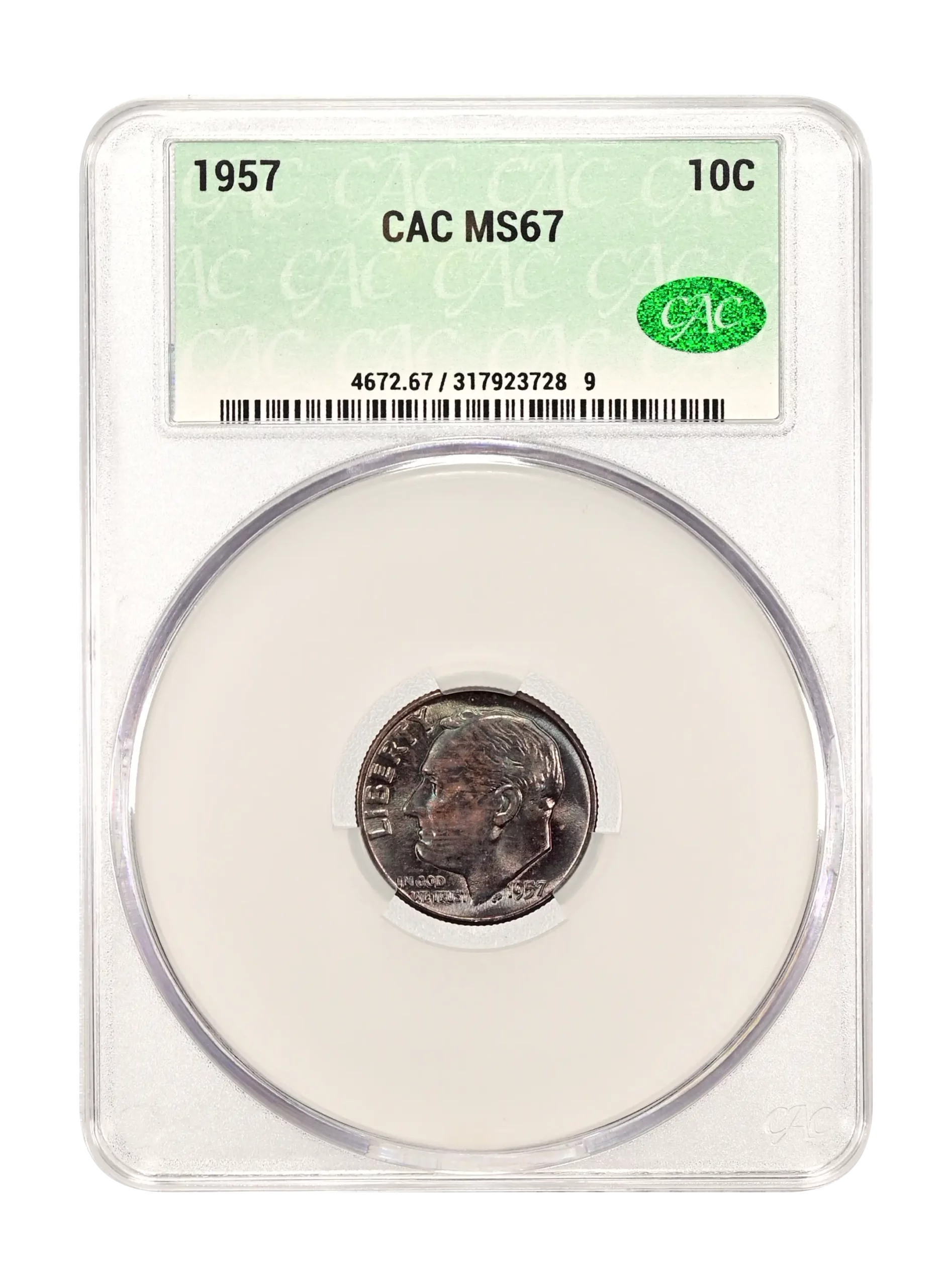
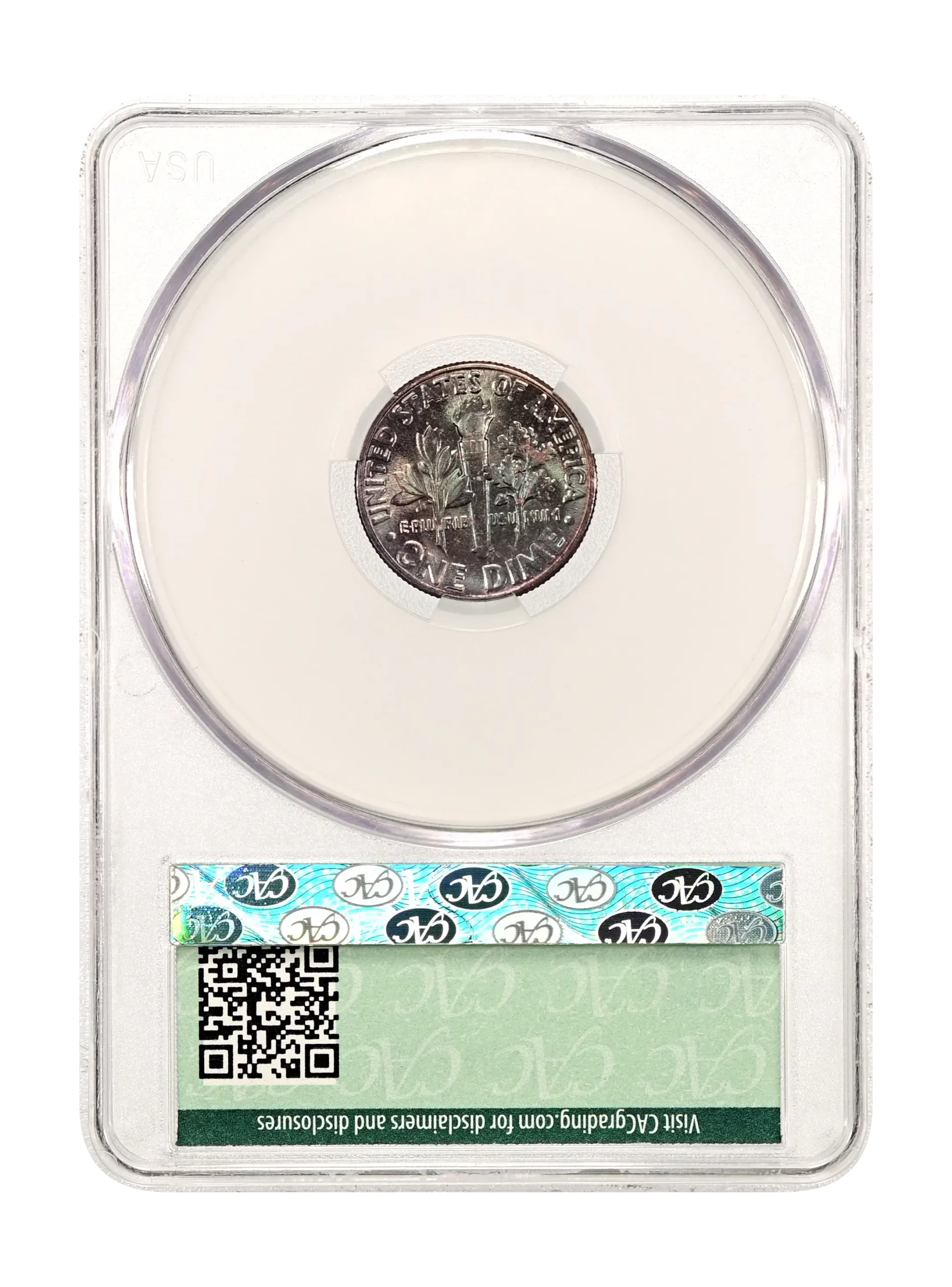
Although blue toning is often seen on silver Roosevelt dimes, there are many with other colors. GreatCollections auctioned a CACG graded MS-67 1958-D dime on May 25, with a notably distinctive appearance. As best as I can tell from viewing images rather than the actual coin, the obverse (front of the coin) is mostly characterized by light colors, apparently with mottled russet, apricot and green hues at the periphery. There are deeper russet and green colors on the reverse (tail), possibly with orange or yellow tints. This 1958-D realized $43.
Coin imaging will never be perfect. Colors and mint luster are different in actuality than they appear to be in published images. It is also true that there is a need to examine coins in actuality with proper lighting in order to fairly grade them. I am not favoring any specific coins here. I am providing an idea of the costs and availability of CACG graded or CAC ‘stickered’ silver dimes.
A collector who does not wish to spend more than $40 on a high quality, silver Roosevelt dime can still obtain desirable examples for a type set. On March 2, 2025, GreatCollections sold a CACG graded MS-66 1961-D dime for $17. On Feb. 23, Great Collections sold a different CACG graded MS-66 1961-D dime for one dollar more, $18. On April 20, GreatCollections sold a CACG graded MS-66 1958 for this same price, $18.
Of course, no one can be certain that high quality, CACG graded Roosevelt dimes will always be available for such prices. An overall point is that quality, CACG graded Roosevelt dimes can be purchased for modest amounts.
On Feb. 23, 2025, GreatCollections sold a CACG graded MS-65 1961-D for $11.06. Regarding most Internet auctions, buyers are responsible for paying for shipping. Bidders are advised to read the terms of sale and to call the respective auction firms to ask questions. Also, relatively inexpensive coins can often be purchased at small coin shows.
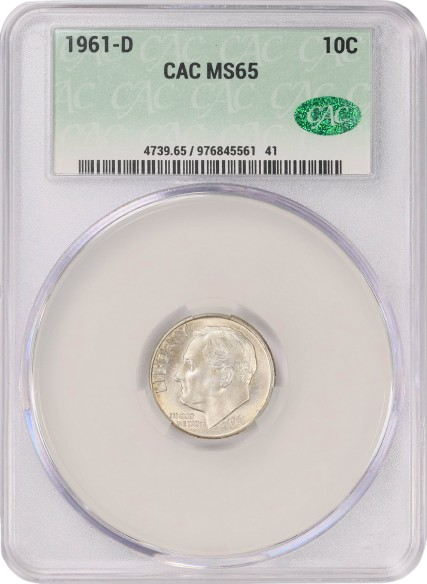
Collectors seeking a Roosevelt dime with a ‘Full Bands’ (FB) designation for a registry set or some other purpose need not spend a substantial sum of money. On Aug. 10, 2025, GreatCollections sold a CACG certified MS-64-FB 1964 dime for $17.
The 1946-S is certainly a ‘better date’ and it is from the first year of the design type. On June 8, 2025, GreatCollections sold a CACG certified MS-66-FB 1946-S for $53. On May 14, GreatCollections sold a CACG certified MS-66-FB 1953-S for $40. Also, some collectors may wish to have dimes from three mints represented in their type sets: Philadelphia, Denver and San Francisco. Additionally, some twentieth century Barber dimes were minted in New Orleans.
Type #12 – Mercury Dimes
Right here on the CAC website, interested collectors may read articles about assembling sets of Mercury dimes, with discussions of the teens, twenties, thirties and nineteen-forties. Mercury dimes were minted from 1916 to 1945 and are all of the same design type.
On July 27, 2025, GreatCollections sold a CACG graded MS-66 1943 Mercury dime for $42 and a CACG graded MS-66 1944 Mercury dime for this same price, $42. On Aug. 3, 2025, GreatCollections sold a CACG graded MS-66 1943-S Mercury dime for $41, a CACG graded MS-66 1944-D for $40 and a CACG graded MS-66 1945-D for $41.
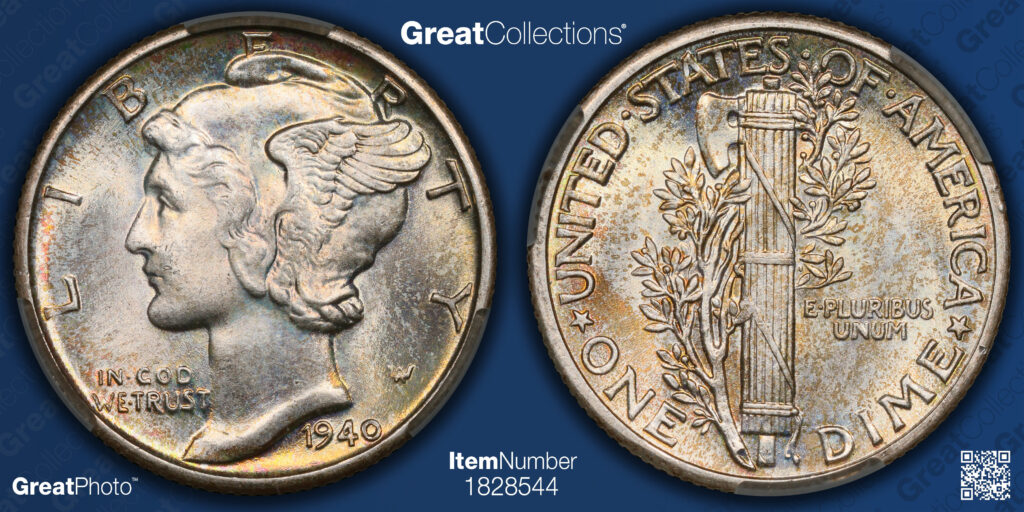
As CACG graded MS-66 Mercury dimes tend to cost just slightly more than CACG graded MS-65 dimes of the same dates, it often makes sense to buy the CACG graded MS-66 coins, as the difference in quality tends to be significant. On May 25, 2025, GreatCollections sold a CACG graded MS-65 1940 dime for $35, six or seven dollars less than the already mentioned CACG graded MS-66 Mercury dimes from the 1940s.
In the realm of classic U.S. coins overall, MS-67 grade coins tend to be worth much more than MS-66 grade coins of the same respective types and dates. Each collector should decide for himself or herself whether the additional cost is worthwhile. My hunch is that most collectors who are thinking about buying MS-67 grade coins will find some MS-66 or MS-65 grade coins to be better values and satisfying.
On Dec. 22, 2024, GreatCollections sold a CACG graded MS-67 1945-S dime for $132. On Sept. 15, 2024, GreatCollections sold a colorfully toned, CACG graded MS-67 1944 dime for $165. On Dec. 20, 2023, Heritage sold a CACG graded MS-67 1939 dime for $99.
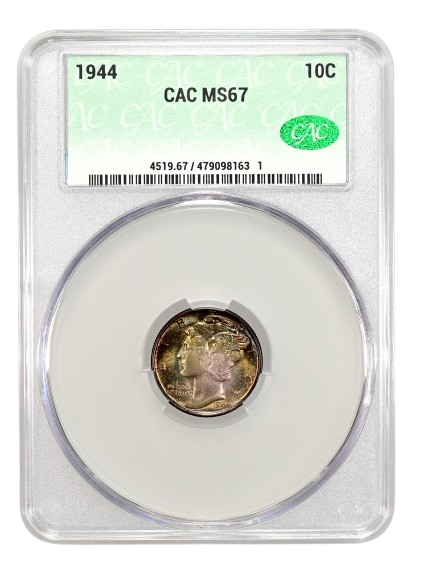
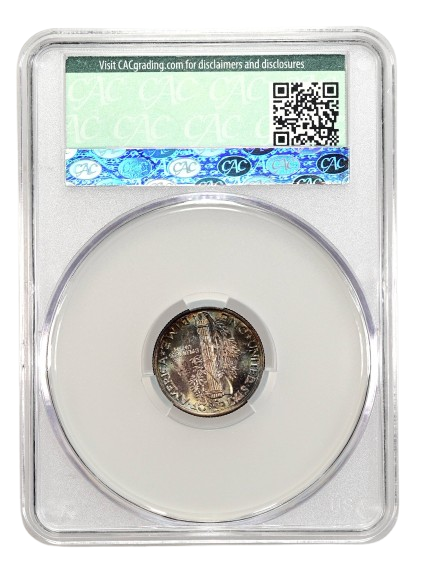
Collectors who feel like owning one of the highest CACG graded Mercury dimes may wish to know that GreatCollections sold a CACG certified MS-68-FB 1939-D dime for $1,017.50 on June 15, 2025. Personally, I do not find that purchase to be a good value. Different collectors, however, have different personalities and preferences for different coins.
GreatCollections sold a very colorful, CAC approved, PCGS graded MS-66 1939-D for $78.10 on April 13, 2025. Would it make more sense to pay $78.10 for this 1939-D rather than more than $1,000 for the just mentioned 1939-D that was certified MS-68-FB?
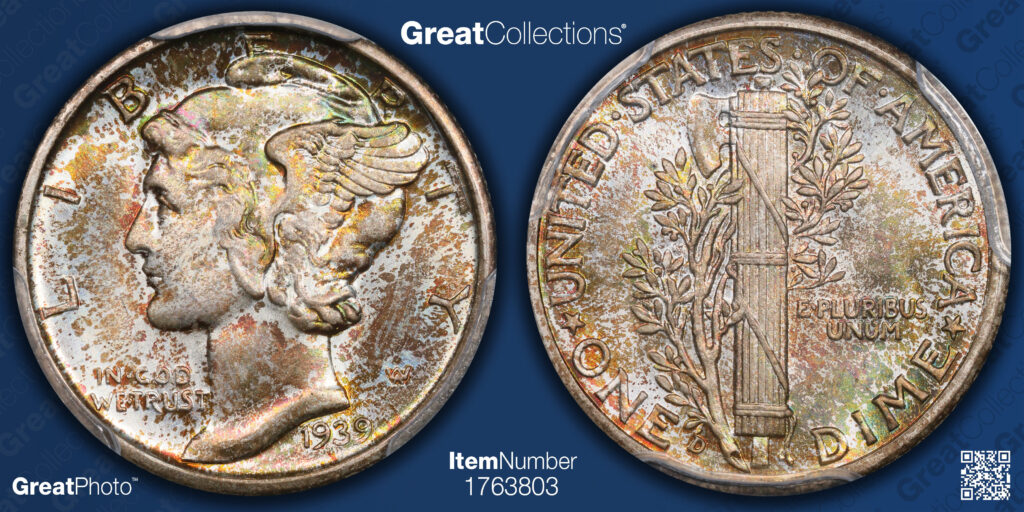
Undoubtedly, there are some collectors who insist upon buying a Mercury dime with a ‘Full Bands’ (FB) designation, to increase a registry score or for another reason. On March 5, 2025, Stack’s Bowers sold a CACG certified MS-66-FB 1937 dime for $105. On Sept. 2, Heritage sold a CACG certified MS-67-FB 1941 dime for $216.
The CPG-CAC medium retail price estimate for a CACG graded MS-66 1941 dime is $55. With ‘Full Bands’ (FB), the retail estimate rises to $90. The CPG-CAC medium retail estimates for an MS-67 1941 are $95 without an FB designation and $210 with ‘Full Bands.’ Given these four options, an MS-66 grade 1941 dime without an FB designation might often be the best value, though I would have to examine coins ‘in hand’ before expressing opinions about them. Each coin is an individual.
Type #11 – Barber Dimes
It is easy to buy just one Barber dime for a type set. Although Barber dimes were first minted in 1892, I limit the discussion here to twentieth-century dates, as the present topic is a twentieth-century type set of dimes.
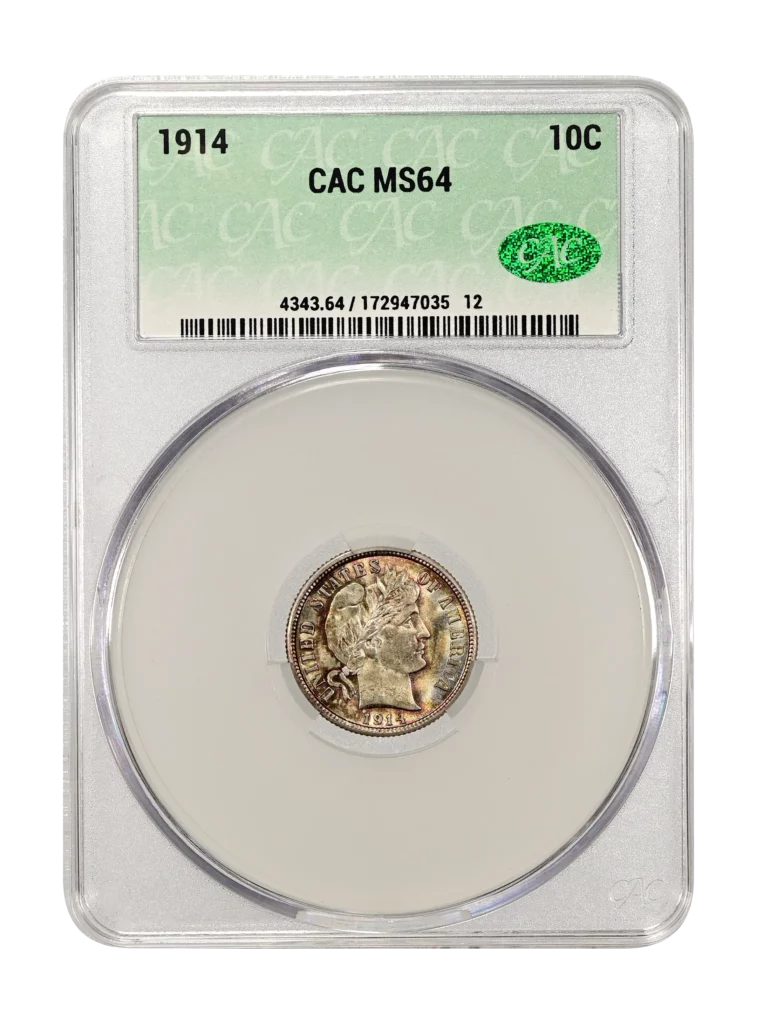
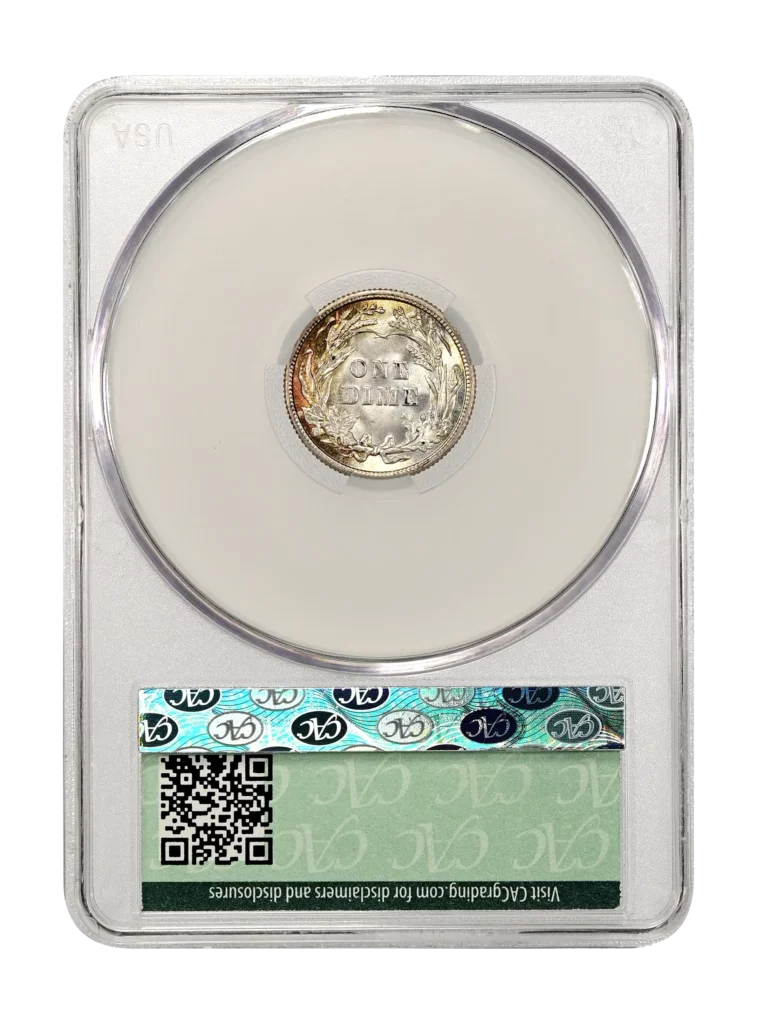
On January 19, GreatCollections sold several CACG graded Barber dimes. A CACG graded MS-63 1906 brought $225.50. Five 1914 dimes were offered, including an MS-63 grade 1914 that brought $226.60. Four CACG graded MS-64 1914 dimes realized similar prices, $261.80, $264, $266.20, and $270.60. Two CACG graded MS-63 1915 dimes were sold, for $184.32 and $221.10, respectively. That same day, two CACG graded MS-64 1916 Barber dimes were auctioned, which brought amounts in line with the just mentioned 1914 dimes, $264 and $266.20.
Of course, collectors can buy significantly higher grade Barber dimes for considerably higher prices. The CPG-CAC medium retail value estimate is $490 each for MS-65 grade 1906, 1907, 1908, 1913, 1914, 1915 and 1916 Barber dimes.
In sum, in MS-64 to MS-66 grades, a CAC-only type set of twentieth century silver dimes may be assembled in a very short period of time. These can become part of a broader type set, perhaps including twentieth century silver quarters and silver half dollars. As a type set of nineteenth century dimes is not very difficult to assemble, I suggest grouping twentieth century dimes and nineteenth century dimes, with the idea of eventually acquiring eighteenth century dimes, to complete an overall type set of silver dimes.
Copyright © 2025 Greg Reynolds
About the Author
Greg is a professional numismatist and researcher, having written more than 775 articles published in ten different publications relating to coins, patterns, and medals. He has won awards for analyses, interpretation of rarity, historical research, and critiques. In 2002 and again in 2023, Reynolds was the sole winner of the Numismatic Literary Guild (NLG) award for “Best All-Around Portfolio”.
Greg has carefully examined thousands of truly rare and conditionally rare classic U.S. coins, including a majority of the most famous rarities. He is also an expert in British coins. He is available for private consultations.
Email: Insightful10@gmail.com
Suggested Articles